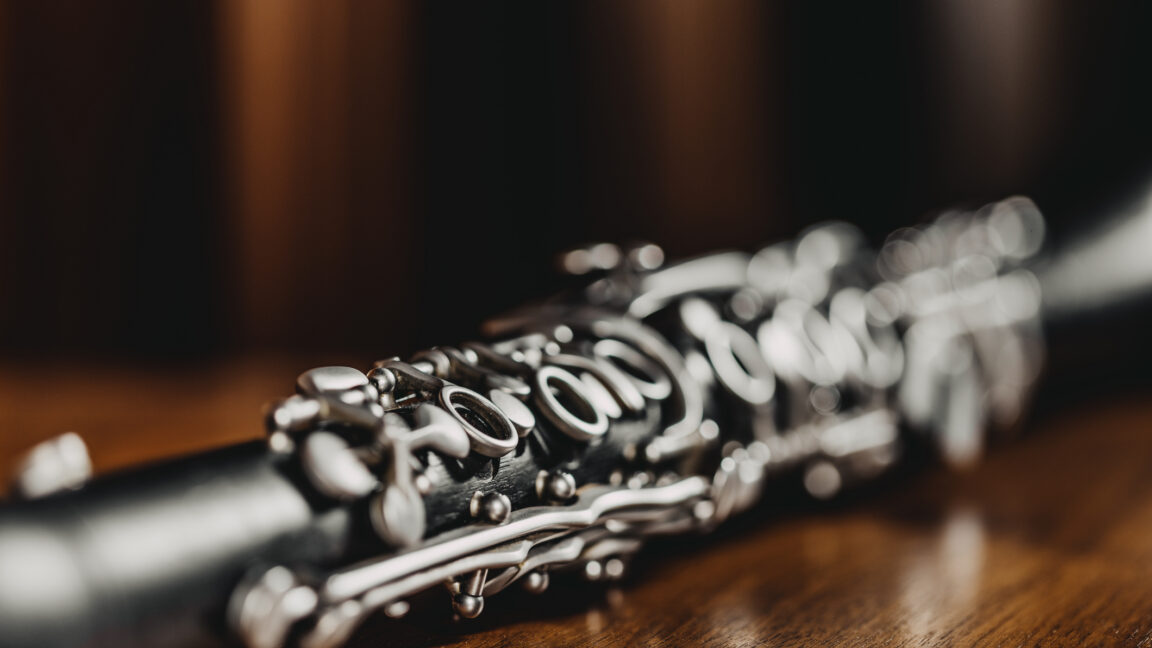
A Florida middle school was locked down last week after an AI security system called ZeroEyes mistook a clarinet for a gun, reviving criticism that AI may not be worth the high price schools pay for peace of mind.
Human review of the AI-generated false flag did not stop police from rushing to Lawton Chiles Middle School. Cops expected to find “a man in the building, dressed in camouflage with a ‘suspected weapon pointed down the hallway, being held in the position of a shouldered rifle,'” a Washington Post review of the police report said.
Instead, after finding no evidence of a shooter, cops double-checked with dispatchers who confirmed that a closer look at the images indicated that “the suspected rifle might have been a band instrument.” Among panicked students hiding in the band room, police eventually found the suspect, a student “dressed as a military character from the Christmas movie Red One for the school’s Christmas-themed dress-up day,” the Post reported.
ZeroEyes cofounder Sam Alaimo told the Post that the AI performed exactly as it should have in this case, adopting a “better safe than sorry” outlook. A ZeroEyes spokesperson told Ars that “school resource officers, security directors and superintendents consistently ask us to be proactive and forward them an alert if there is any fraction of a doubt that the threat might be real.”
“We don’t think we made an error, nor does the school,” Alaimo said. “That was better to dispatch [police] than not dispatch.”
Cops left after the confused student confirmed he was “unaware” that the way he was holding his clarinet could have triggered that alert, the Post reported. But ZeroEyes’ spokesperson claimed he was “intentionally holding the instrument in the position of a shouldered rifle.” And seemingly rather than probe why the images weren’t more carefully reviewed to prevent a false alarm on campus, the school appeared to agree with ZeroEyes and blame the student.
“We did not make an error, and the school was pleased with the detection and their response,” ZeroEyes’ spokesperson said.
School warns students not to trigger AI
In a letter to parents, the principal, Melissa Laudani, reportedly told parents that “while there was no threat to campus, I’d like to ask you to speak with your student about the dangers of pretending to have a weapon on a school campus.” Along similar lines, Seminole County Public Schools (SCPS) communications officer, Katherine Crnkovich, emphasized in an email to Ars to “please make sure it is noted that this student wasn’t simply carrying a clarinet. This individual was holding it as if it were a weapon.”
However, warning students against brandishing ordinary objects like weapons isn’t a perfect solution. Video footage from a Texas high school in 2023 showed that ZeroEyes can sometimes confuse shadows for guns, accidentally flagging a student simply walking into school as a potential threat. The advice also ignores that ZeroEyes last year reportedly triggered a lockdown and police response after detecting two theater kids using prop guns to rehearse a play. And a similar AI tool called Omnilert made national headlines confusing an empty Doritos bag with a gun, which led to a 14-year-old Baltimore sophomore’s arrest. In that case, the student told the American Civil Liberties Union that he was just holding the chips when AI sent “like eight cop cars” to detain him.
For years, school safety experts have warned that AI tools like ZeroEyes take up substantial resources even though they are “unproven,” the Post reported. ZeroEyes’ spokesperson told Ars that “in most cases, ZeroEyes customers will never receive a ‘false positive,'” but the company is not transparent about how many false positives it receives or how many guns have been detected. An FAQ only notes that “we are always looking to minimize false positives and are constantly improving our learning models based on data collected.” In March, as some students began questioning ZeroEyes after it flagged a Nerf gun at a Pennsylvania university, a nearby K-12 private school, Germantown Academy, confirmed that its “system often makes ‘non-lethal’ detections.”
One critic, school safety consultant Kenneth Trump, suggested in October that these tools are “security theater,” with firms like ZeroEyes lobbying for taxpayer dollars by relying on what the ACLU called “misleading” marketing to convince schools that tools are proactive solutions to school shootings. Seemingly in response to this backlash, StateScoop reported that days after it began probing ZeroEyes in 2024, the company scrubbed a claim from its FAQ that said ZeroEyes “can prevent active shooter and mass shooting incidents.”
At Lawton Chiles Middle School, “the children were never in any danger,” police confirmed, but experts question if false positives cause students undue stress and suspicion, perhaps doing more harm than good in absence of efficacy studies. Schools may be better off dedicating resources to mental health services proven to benefit kids, some critics have suggested.
Laudani’s letter encouraged parents to submit any questions they have about the incident, but it’s hard to gauge if anyone’s upset. Asked if parents were concerned or if ZeroEyes has ever triggered lockdown at other SCPS schools, Crnkovich told Ars that SCPS does not “provide details regarding the specific school safety systems we utilize.”
It’s clear, however, that SCPS hopes to expand its use of ZeroEyes. In November, Florida state Senator Keith Truenow submitted a request to install “significantly more cameras”—about 850—equipped with ZeroEyes across the school district. Truenow backed up his request for $500,000 in funding over the next year by claiming that “the more [ZeroEyes] coverage there is, the more protected students will be from potential gun violence.”
AI false alarms pose dangers to students
ZeroEyes is among the most popular tools attracting heavy investments from schools in 48 states, which hope that AI gun detection will help prevent school shootings. The AI technology is embedded in security cameras, trained on images of people holding guns, and can supposedly “detect as little as an eighth of an inch of a gun,” an ABC affiliate in New York reported.
Monitoring these systems continually, humans review AI flags, then text any concerning images detected to school superintendents. Police are alerted when human review determines images may constitute actual threats. ZeroEyes’ spokesperson told Ars that “it has detected more than 1,000 weapons in the last three years.” Perhaps most notably, ZeroEyes “detected a minor armed with an AK-47 rifle on an elementary school campus in Texas,” where no shots were fired, StateScoop reported last year.
Schools invest tens or, as the SCPS case shows, even hundreds of thousands annually, the exact amount depending on the number of cameras they want to employ and other variables impacting pricing. ZeroEyes estimates that most schools pay $60 per camera monthly. Bigger contracts can discount costs. In Kansas, a statewide initiative equipping 25 cameras at 1,300 schools with ZeroEyes was reportedly estimated to cost $8.5 million annually. Doubling the number of cameras didn’t provide much savings, though, with ZeroEyes looking to charge $15.2 million annually to expand coverage.
To critics, it appears that ZeroEyes is attempting to corner the market on AI school security, standing to profit off schools’ fears of shootings, while showing little proof of the true value of its systems. Last year, ZeroEyes reported its revenue grew 300 percent year over year from 2023 to 2024, after assisting in “more than ten arrests through its thousands of detections, verifications, and notifications to end users and law enforcement.”
Curt Lavarello, the executive director of the School Safety Advocacy Council, told the ABC News affiliate that “all of this technology is very, very expensive,” considering that “a lot of products … may not necessarily do what they’re being sold to do.”
Another problem, according to experts who have responded to some of the country’s deadliest school shootings, is that while ZeroEyes’ human reviewers can alert police in “seconds,” police response can often take “several minutes.” That delay could diminish ZeroEyes’ impact, one expert suggested, noting that at an Oregon school he responded to, there was a shooter who “shot 25 people in 60 seconds,” StateScoop reported.
In Seminole County, where the clarinet incident happened, ZeroEyes has been used since 2021, but SCPS would not confirm if any guns have ever been detected to justify next year’s desired expansion. It’s possible that SCPS has this information, as Sen. Truenow noted in his funding request that ZeroEyes can share reports with schools “to measure the effectiveness of the ZeroEyes deployment” by reporting on “how many guns were detected and alerted on campus.”
ZeroEyes’ spokesperson told Ars that “trained former law enforcement and military make split-second, life-or-death decisions about whether the threat is real,” which is supposed to help reduce false positives that could become more common as SCPS adds ZeroEyes to many more cameras.
Amanda Klinger, the director of operations at the Educator’s School Safety Network, told the Post that too many false alarms could carry two risks. First, more students could be put in dangerous situations when police descend on schools where they anticipate confronting an active shooter. And second, cops may become fatigued by false alarms, perhaps failing to respond with urgency over time. For students, when AI labels them as suspects, it can also be invasive and humiliating, reports noted.
“We have to be really clear-eyed about what are the limitations of these technologies,” Klinger said.
Read full article
Comments
 Log in